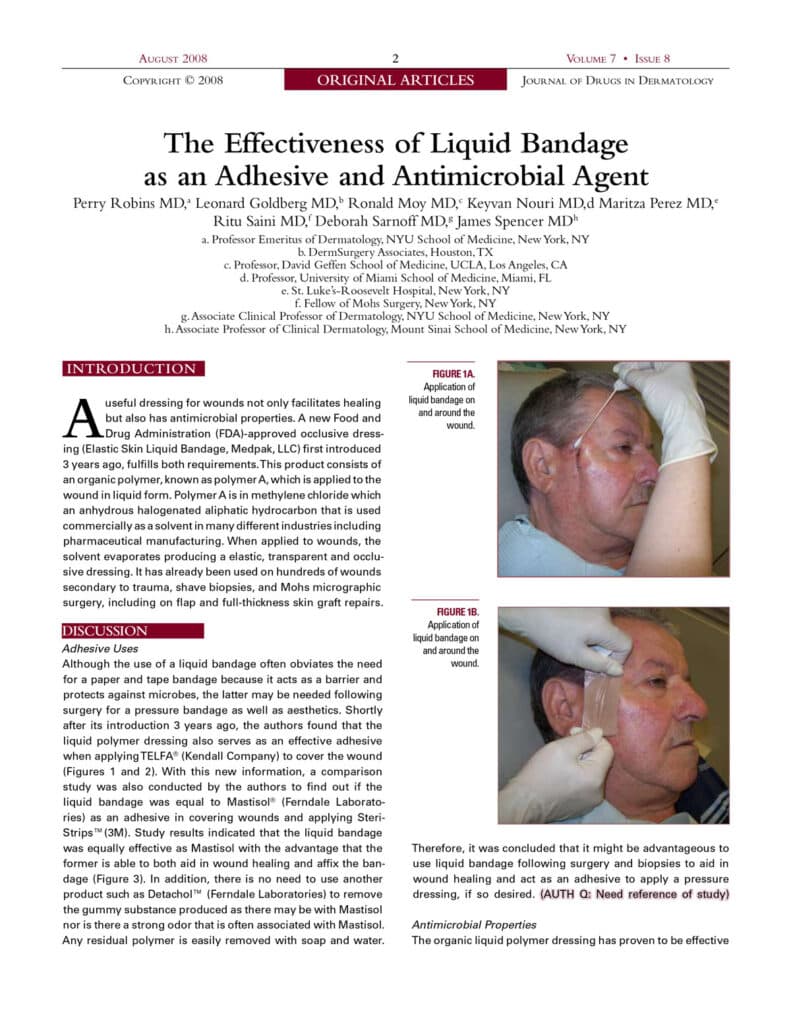
The Effectiveness of Liquid Bandage as an Adhesive and Antimicrobial Agent
Conclusion In conclusion, a new organic polymer in organic solvent has initially been found to have success in expediting healing of wounds secondary to trauma and surgical procedures. It is easy to apply and well-tolerated, forming a transparent barrier that is both functional by virtue of its antimicrobial and adhesive properties, as well as cosmetically acceptable. Recent laboratory findings suggest that it may also has anti-fungal capabilities and could hypothetically to be used to treat uncomplicated dermatophyte infections, including those that may necessitate systemic treatment. Clearly, in vivo studies are necessary to determine the clinical relevance of these findings and whether this diverse product will have a place in the dermatologist’s armamentarium for the purpose of treating superficial fungal infections. Its use as an adhesive will clearly benefit patients in that it reduces the need for multiple products by acting as both an antimicrobial and an easily removable adhesive.
EVALUATION OF A FLEXIBLE NEW LIQUID POLYMER WOUND DRESSING
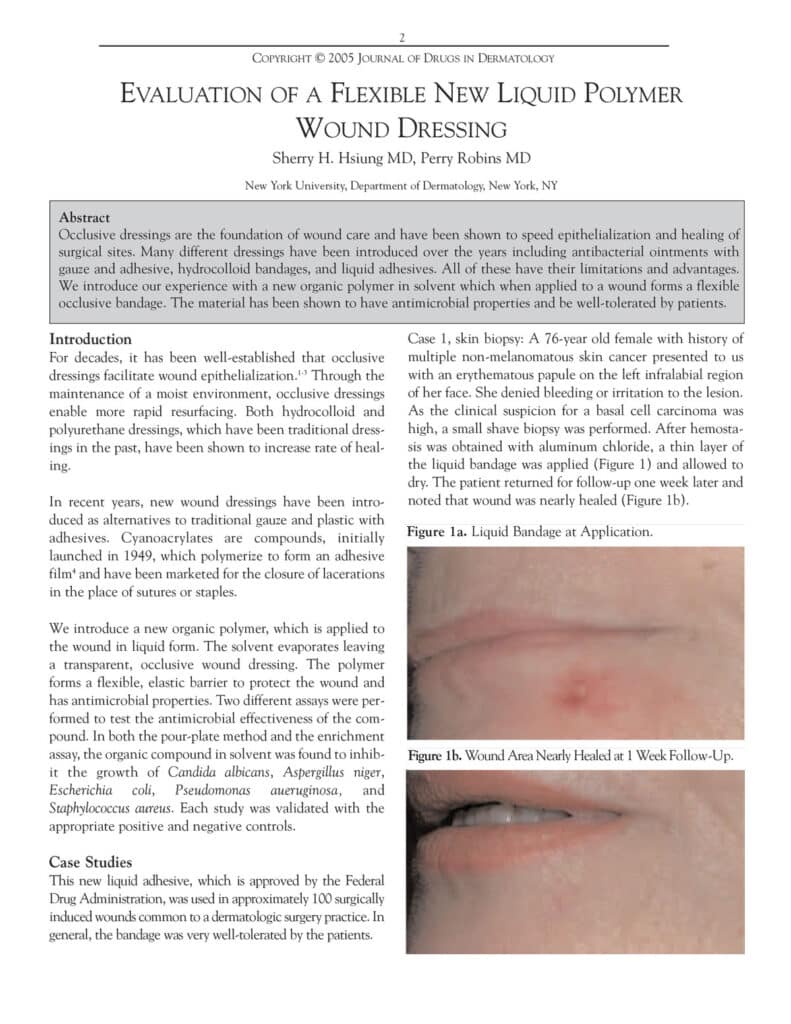
Abstract Occlusive dressings are the foundation of wound care and have been shown to speed epithelialization and healing of surgical sites. Many different dressings have been introduced over the years including antibacterial ointments with gauze and adhesive, hydrocolloid bandages, and liquid adhesives. All of these have their limitations and advantages. We introduce our experience with a new organic polymer in solvent which when applied to a wound forms a flexible occlusive bandage. The material has been shown to have antimicrobial properties and be well-tolerated by patients.